

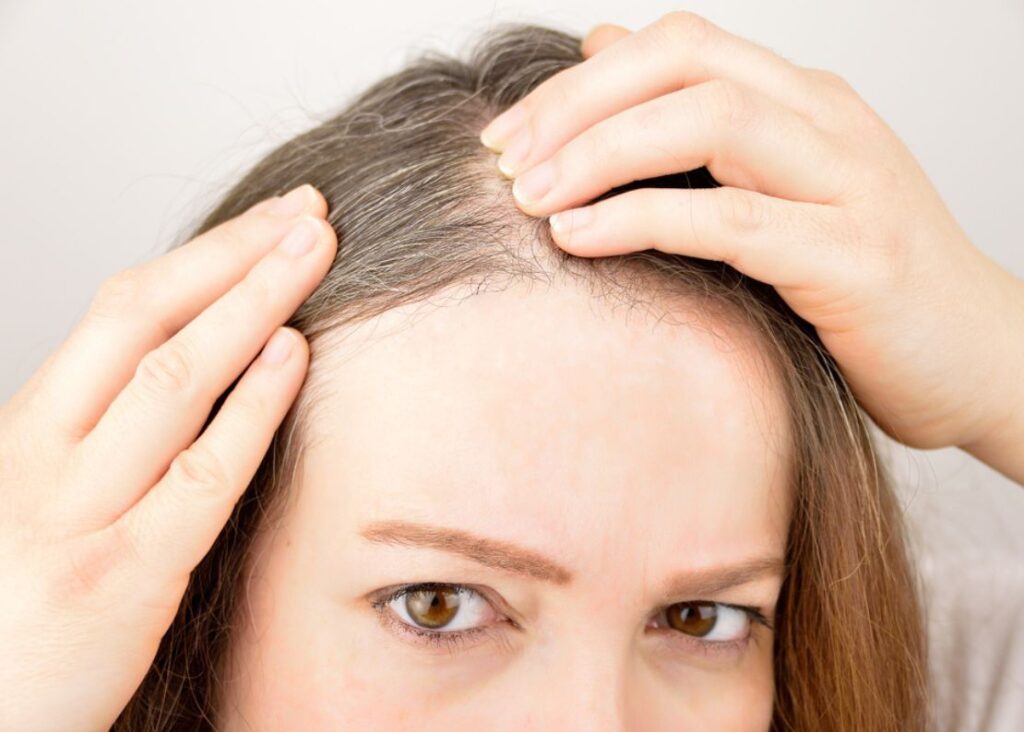
Hair thinning has a way of becoming noticeable in stages. Maybe your part starts looking wider in photos, your scalp becomes easier to see under bright lights, or your ponytail simply does not feel as full as it used to. Those changes can be frustrating, especially when shampoos and supplements do not seem to address what is happening at the scalp.
Hair restoration does not always have to begin with surgery. KeraLase takes a non-surgical approach by pairing Lutronic LaseMD Ultra laser technology with a topical growth-factor formulation called KeraFactor serum. The laser creates tiny channels in the scalp that improve the delivery of the serum where it is needed.
Keep reading to see how these two parts work together and why treating the scalp itself can be an important part of a thinning-hair strategy.
What Is KeraLase?
KeraLase is a non-surgical hair loss treatment designed to create better conditions at the scalp for the delivery of specialized topical ingredients. Rather than relying on a serum sitting primarily on the skin’s surface, the treatment first prepares the scalp using Lutronic LaseMD Ultra laser technology.
The laser creates microscopic channels within the scalp. These temporary pathways increase the skin’s ability to absorb the topical product applied immediately afterward. KeraFactor serum is then placed over the treatment area, allowing its ingredients to penetrate more effectively than topical application alone.
The KeraFactor serum used with KeraLase contains growth factors and skin proteins formulated to support hair and scalp health. According to Ethos Medspa’s treatment approach, an infrared cap is also applied for seven minutes following treatment. The combination brings together laser-created microchannels, topical serum, and infrared light as part of one hair-restoration session.
This makes KeraLase different from traditional hair transplant surgery. There are no donor follicles being removed and relocated. Instead, treatment focuses on supporting the scalp and existing hair follicles through a minimally invasive, technology-driven approach.
How KeraLase Works for Thinning Hair
KeraLase hair restoration is based on a combination rather than one standalone step. Each part of the treatment has a specific role, beginning with preparation of the scalp and continuing with targeted serum delivery.
1. The Laser Prepares the Scalp
One of the challenges with topical hair products is getting their ingredients beyond the outermost skin barrier. Your skin is designed to protect you, which is a good thing. However, that barrier can also limit how efficiently certain topical formulations penetrate.
KeraLase approaches this problem by preparing the scalp before the serum is applied. Lutronic LaseMD Ultra delivers controlled laser energy that creates microscopic channels in the treatment area.
These microchannels temporarily increase the scalp’s absorption capabilities. Instead of simply placing a product over intact skin and waiting for it to penetrate, the treatment creates pathways designed to improve topical delivery.
This is one of the major differences between KeraLase and simply purchasing another hair serum. The laser and serum are intentionally paired so that the first step prepares the scalp for the second.
2. Microchannels Improve Serum Delivery
The word “laser” often makes people think of hair removal, but laser hair restoration works toward a completely different goal. With KeraLase, the LaseMD Ultra laser is used to create conditions that support the delivery of the hair-focused serum.
The microscopic channels produced by the treatment give KeraFactor a more direct route into the treated scalp. This matters because the effectiveness of a topical product is influenced not only by what it contains but also by how well those ingredients can reach the intended area.
Think of it as preparing the ground before adding what it needs. KeraLase does not simply place a serum onto the scalp and hope enough is absorbed. It deliberately prepares the treatment area first.
These channels are microscopic rather than surgical incisions. That allows KeraLase to offer a less invasive option for patients interested in improving thinning hair without undergoing hair transplant surgery.
3. KeraFactor Brings the Growth Factors
Once the scalp has been prepared, the KeraFactor serum becomes the next part of the process. This specialized formulation contains growth factors and skin proteins intended to support scalp vitality and hair growth.
Growth factors are signaling proteins involved in various cellular processes. In the context of KeraLase, the serum is formulated specifically to complement the laser-created microchannels and support the environment surrounding existing hair.
This pairing is central to the treatment. The laser is not being used alone, and the serum is not simply added as an afterthought. One creates the pathways, while the other supplies the topical formulation intended to take advantage of those pathways.
For patients, that means a KeraLase appointment is better understood as a combination treatment. Its components have been brought together around a shared goal of supporting thinning hair.
4. Infrared Light Completes the Session
Ethos Medspa’s KeraLase protocol includes another step after the serum is applied. Patients receive seven minutes beneath an infrared cap as part of the treatment.
The infrared portion complements the laser and serum phases of the session. According to the treatment information, this combination is used to deepen penetration of the growth factors and support the overall approach to thinning and hair loss.
That creates a three-part process:
- LaseMD Ultra creates microscopic channels in the scalp.
- KeraFactor serum supplies specialized growth factors and skin proteins.
- Infrared light completes the post-treatment protocol.
The important point is that KeraLase does not depend on one isolated technology. Its approach is intentionally layered, with each phase building on the one before it.
5. It Focuses on Scalp Health
Hair gets most of the attention when thinning begins, but the scalp deserves attention too. After all, this is the environment in which existing follicles live and function.
KeraLase is designed around improving conditions at the scalp. The laser prepares the treatment area, while the serum delivers ingredients formulated to support scalp vitality and hair growth.
This focus can be useful for patients who have spent most of their time treating the visible hair shaft. Conditioners, masks, and styling products may make existing strands look shinier or feel softer, but they do not necessarily address what is happening at the scalp.
A non-surgical hair loss treatment like KeraLase shifts that focus. Instead of asking only how to make existing strands look thicker, it looks at how a treatment can support the environment from which those strands grow.
6. It Works With Existing Hair
KeraLase should not be confused with a hair transplant. Hair transplantation physically moves follicles from one area of the scalp to another. KeraLase does not create new follicles or relocate them.
Instead, the treatment is designed to support patients dealing with thinning hair by working with the existing scalp and follicles. That distinction is important when setting expectations.
Someone with early or progressive thinning has a very different starting point from a person with an area where follicles are no longer viable. A treatment designed to support existing hair cannot necessarily reproduce what surgical transplantation accomplishes in advanced hair loss.
This is why an evaluation matters before treatment begins. Understanding the pattern and possible cause of thinning can help determine whether KeraLase fits the patient’s situation.
7. Treatment Does Not Require Surgery
Surgery can be an effective option for certain forms of hair loss, but not everyone wants or needs a surgical procedure. Some patients are looking for an earlier intervention or a treatment that fits more easily into everyday life.
KeraLase does not require harvesting donor follicles, creating recipient sites, or transplanting individual grafts. That removes many of the steps associated with surgical hair restoration.
This makes KeraLase hair restoration appealing to patients who prefer a technology-based, non-surgical approach. It may also feel more approachable to someone who has noticed thinning but is not prepared to consider transplantation.
Non-surgical does not mean that every person with hair loss is automatically a candidate. The underlying reason for thinning still matters, and treatment recommendations should be based on an appropriate assessment.
8. It Addresses More Than the Visible Strand
When hair becomes thinner, it is easy to focus entirely on what you can see. Patients may switch shampoos, buy thickening sprays, avoid certain hairstyles, or use fibers to camouflage areas where the scalp is showing.
Those approaches can change the appearance of the hair temporarily, but KeraLase takes a different direction. It targets the scalp with controlled laser energy before applying a specialized serum.
That makes it a treatment rather than a cosmetic cover-up. The goal is to support the environment associated with hair growth rather than simply make thinning less visible for the day.
This distinction can help patients set realistic expectations. KeraLase is not an instant volumizing treatment. Any meaningful change related to the hair growth cycle takes time.

Give the Scalp Some Attention
Hair thinning is visible above the skin, but meaningful treatment may need to pay attention to the environment below it. KeraLase combines fractional laser technology, targeted serum delivery, and infrared light to approach thinning hair from the scalp outward.
At Ethos Medspa in Chesterfield, MO, patients interested in hair restoration can explore whether KeraLase fits their pattern of thinning and long-term goals. With the laser and KeraFactor working as complementary parts of one treatment, the focus shifts from simply disguising thinning hair to supporting the scalp where healthier-looking hair begins.
Call us today to schedule your appointment!